Showing posts with label 2nd BTX - 1st term. Show all posts

Thursday, December 1, 2016

Does humor play an important role in life?

This is an essay made in class, and it corresponds to our English project about humor. It has the objective of fulfilling the structure of an argumentative text, dealing about a topic which hasn't been chosen by me.

Humor seems to be a general human trait. Everyone is able to laugh –as long as it's not impossible due to factors which aren't related to human nature–, and that makes humor a good way to build bonds between persons.

"Stop having fun right now!"
For instance, science seems to point out that humor plays a determining role in our lives: it turns out that laughing makes them healthier and longer. Apart from its biological benefits, though, humor has also been proven to make socializing much easier and much more enjoyable, which is crucial in contexts like workplaces.

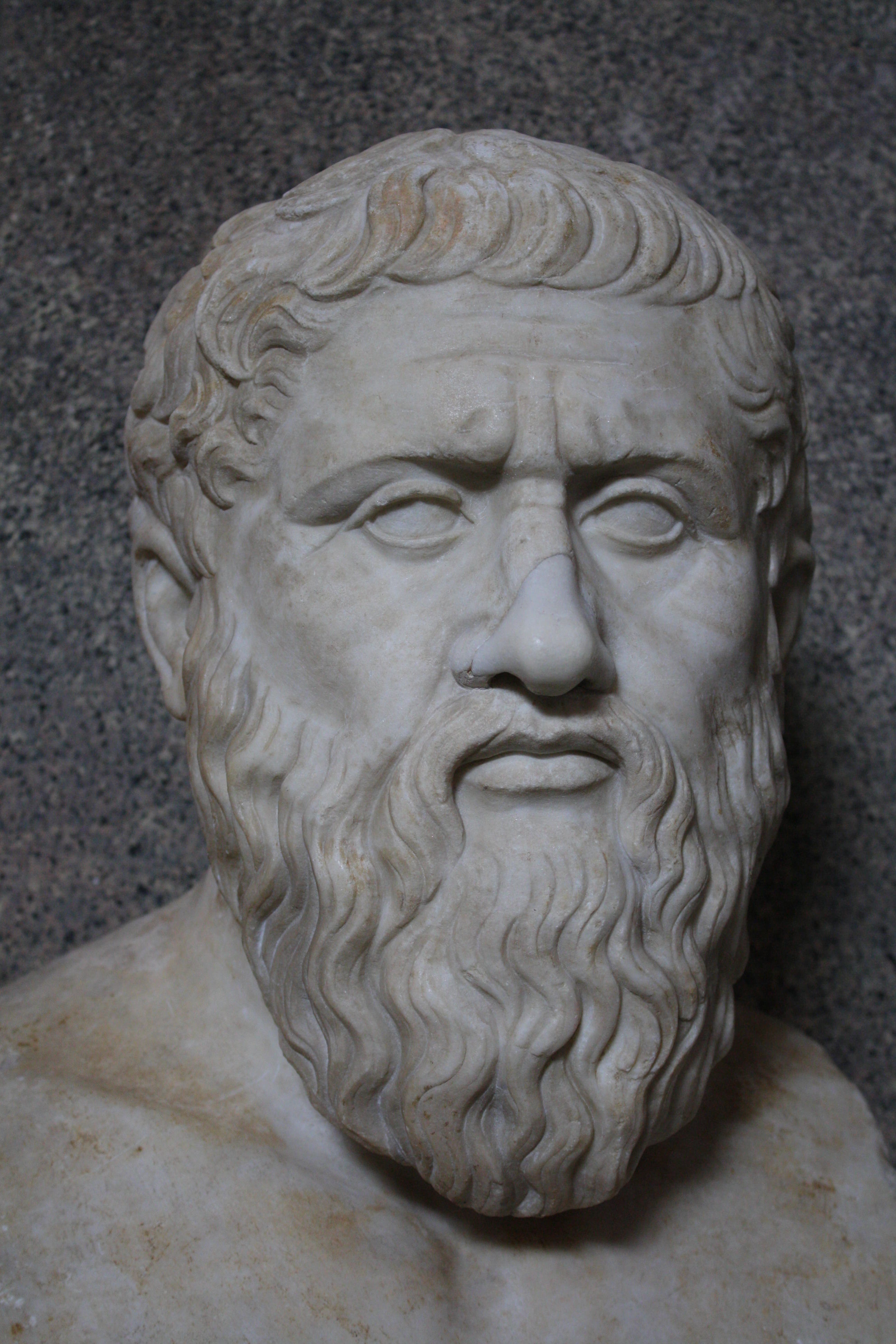
However, there are many points of view that take humor as something unimportant or even negative. In fact, remarkable authors of the History of Western Philosophy like Plato describe humour and other pleasures and passions as something that must be avoided in order to focus on useful work for society and the gathering of knowledge.

Regarding my own opinion, as a human being –and as a rageful detractor of Plato–, I'm on the pro-humor side: it makes us feel good and it helps us bond, why should we avoid such a blessing?

Wednesday, November 30, 2016

About the oral presentation

 "Why do you love me?
Why do you love me?"
"Why Do You Love Me" - Garbage

As a class task, after an oral presentation about a variety of topics that were once supposed to fit a limited number of categories, we've been told to rewatch ourselves and judge how we did. My presentation was about activism, in the sense of fighting (in a non-violent way, of course) for the sake of pursuing a certain objective related to a societal change or the suppression of a social issue.

As I started speaking, my fantastic ideas of interacting with the crowd with striking questions and keeping everyone awake with the dynamization of ideas, as well as part of the content, vaporized from my mind like sublimating iodine, leaving a trace of purple smoke only my almost-crying brain could see. And, as the presentation went on, so did my nervousness and the disappearing of any strand of excellence my humble work could harbour: by the time I was exposing historical examples of activism, I was almost trembling and I'm not really sure I was speaking English... or any language ever known by Mankind.

Things became a bit less panic-inducing with the topic moving towards the possibility of activism in our generation. My interactionism came back and I could somehow speak to one of the other students without stuttering too much. Overall, the ending wasn't so terrible.

Hello, this Heather about presentation made by activism...
Another detail was the informatical support. I knew from minute one that my OpenOffice Impress presentation was lame and uninteresting, consisting solely on coloured textboxes with different typographies and spawning animations; the thing, I guess, is that this should serve me as an opportunity to learn why making a presentation during the bus trip to school with a netbook is never a good idea: presentations are not presentations without content copied from the Net.

After watching myself, I realise I've been even too optimistic; it's not that I was nervous: I was practically numb. I'm still going through long sessions of meditation in order to reach a conclusion regarding how the hell my classmates knew it was me, or anybody at all. Another issue is how the whole presentation was like "hi, this is me, now GO FIGHT FOR MY RIGHTS, MY BELOVED ALLIES!" I've never considered myself to be a good despot either way.

So, yes, my presentation was an incredibly overrated mush of overlooked vocabulary meant to hide an obvious lack of content and a terrible informatical support. But, you know what the worst part is? Everyone said I was the best.

Thursday, November 10, 2016

Religion as a mass control method


"Unless I watch you disappear in to the ground
My one mistake was that I never let you down,
So I'll waste my time
And I'll burn my mind,
I'm Miss Nothing,
I miss everything."
"Miss Nothing" - The Pretty Reckless

Experience leads us to the conclusion that every human being requires, by nature, a system of beliefs, which can range from the firm conviction that there's a spaghetti monster watching over Mankind to the common conception that the existence of the world around us is an absolute truth. Beliefs, though, have a wide variety of origins and natures: some come from philosophic statements from known authors, some are taken as a trait Humanity has had since its very origin, some require certain rites and actions such as praying and some don't imply any specific action taken.

Love it or love it twice, but love it either way.
Once the prior has been stated, it's important to stress on those belief systems that require us to take action in certain ways. In our day and age, we're witnesses of the existence of many generalized belief systems known as religions that share the trait of morally forcing their believers to do so. That obligation, however, doesn't assume the believer will do it for the sake of religious devotion: no, in most* cases, in order to make sure believers follow the established path, religions threaten them with elements like eternal punishment after death or dishonour.

And, once again, it's important to highlight one detail of what has been exposed: in most cases, believers follow the rites and paths of their religion with the sole purpose of avoiding a negative consequence of not doing so; in other words, they do so because they fear what might happen otherwise.

Though this trait major religions of our world share has a very important outcome, it's not what I wish to focus on. On of the things that catch my eye the most is the societal imposition of the beliefs that conform a religion (or, said in a better way, of the fear leading to a certain religion). In an environment where a concrete religion is present (call it a family, a social group, or a intellectually-third-world country), individuals who are yet to form an established opinion and, therefore, are still predisposed to acquire a belief system, are unconsciously forced to, as I call it, "breathe what's in the air," or, in other words, adopt the predominant religion in the context.

Religions are not innate ideas, they are passed from individual to individual in a variety of ways, majorly involving some kind of social imposition or assumption. A pattern that comes up as incredibly useful to exemplify this is the case for sects, where, for the sake of acceptance in a social group, an often extremely delusional belief system, mostly created in recent times with the conscious objective of manipulating a group of individuals, is adopted, often leading to actions such as the transferring of material possessions to the manipulator or even collective suicide rites.

See? Jesus looks the other way.
Leaving that behind, another one of the traits most religions share which captures my attention is the value those religions tend to assign to the believers' actions, whether they are strictly religious acts or not. Most religions assume the objective of our physical life is pleasing a higher entity in order to gain salvation and avoid the punishment I mentioned before. This implies the demotion of Humanity from feeling entities, able to decide what to do and to do it for the sake of themselves and others, to slaves of a deity with no other worth than making God get a boner (sorry for that, I might be getting a bit angry here.)

And, yet again, this leads me to something I've already spoken about: in this case, Humanism. Believing the people around are worthy of love and believing in most religions are not compatible.

The list could go on and on. I know this doesn't do the job as a proof that religions are wrong, but it does prove they are the first thing to get rid of when trying to improve one's own life.

*Whenever the word "most" is used with religions, it has the sole objective of excluding exceptions with almost no representation in our western world like Buddhism. Major religions (Christianity, Islam and Jewism) fall to the definition used to write this post.
Friday, October 21, 2016

Let's talk about #SoyGayYDelPP


"Do you get a little kick out of being slow-minded?"
"F*ck You" - Lily Allen

I've already made my insight on Spanish politics. It isn't a topic I especially want in my blog, but as a person who knows which factors my life and future are driven by, I know the worst I can possibly do for myself is ignoring it.

However, politics as a topic has many spheres and issues to deal about. Political parties are in a constant struggle to convince overevolved monkeys like us that they are relatable from their unrealistic state of apparently sempiternal –until someone grabs a gun– economic privilege, and, for the pursue of that end, they have the need of using certain displays of character with the focus of resembling those outside that privilege state.

One of those desperate attempts to catch the vast minority's attention was the spreading of the Spain-bound epidemic known in social media like Twitter as #SoyGayYDelPP (something like #I'mGayAndIMilitateThePP). And, as to discuss about it, I'd like to analyze what that hashtag says, just the meaning of the words.

We're before a statement of the structure "I'm part of an LGBT collective and of a right-wing party." It's not that it's a common structure in other sentences of the kind, it's just that the structure is important in this case: this could basically translate to "I'm part of a minority and I'm against equality."
Friends of gays, lesbians and social inequality

And, no, the right wing cannot be pro-equality. The right wing is, as an ideology, the defense of a system based on the generation of inequality, at least in the economic plane –also known as Capitalism–, so it is a contradiction to have equality in any sense as a finality and sympathise with the right wing. However, this translated to the LGBT sphere makes yet another twist: we're speaking about a collective of LGBT persons who want not equality for LGBT minorities but individual privilege for themselves: we're not speaking about a mass, or even a minority, we're speaking about a lobby.

And I think by this point we can all recognize where the problem is.

We cannot fight back against people reducing our struggle to "the gay lobby's agenda" when the public eye's grasp is filling with people proving them right: how can I tell a homophobe that gays don't want to have privilege over heterosexuals or even that gays aren't everything inside the LGBT collective when everything that can be seen are gays seeking individual privilege?

This could even link to other problems and issues related to LGBT rights and visibility if overlooked: it perpetuates the stereotyping of the homosexual male while also contributing to the undercategorization and dismissal of other LGBT minorities: we're not speaking about a political party with a stablishing diverse LGBT circle like Podemos or with even a long stablished one and even with transgender visible members and deputies like PSOE, no, we're before the common representation of the gay –rich, white– man as the totality of the LGBT collective, stereotyping and nomalization included. That, though, is another issue.

About engagement and arts online


"Jim told me that
He hit me and it felt like a kiss."
"Ultraviolence" - Lana Del Rey

I'm not an artist, I think calling myself so would be egotistical and excessively self-flattering, but when it comes to artistic disciplines like writing I do consider myself some kind of an initiate: I think I've spoken my mind about why Wattpad isn't exactly the best place to progress as a writer in certain areas, genres or topics, but it's still an adequate place to share and publish written compositions and, if one is lucky, get noticed, receive feedback and get help to improve.

However, this benefit coming from the sharing of one's work with a public audience wouldn't be possible if it wasn't for what that audience does, and that's where problems start. There isn't any inherent obligation for art consumers to contact authors in any way, but I think it's more than demandable that we, as viewers, readers, listeners or whatever, make an effort in order to detect whether or not an author is looking for opinions from us. This is especially important when we're before novice authors in websites that are meant to allow a more or less direct interaction between writers and readers (as is the case between composers and listeners, illustrators and viewers, etcetera) like the so-mentioned webpage or DeviantArt.

This is something I personally do whenever I'm able to: a direct comment section is a good place to point out the good things one likes about what they've seen. If that leads to a private conversation between author and viewer, the last can politely ask if the creator desires further feedback and, if the response is affirmative, then and only then kindly point out what one doesn't like or thinks could be improved, always respecting the author's decision to either change the spoken aspects or not. The point is keeping interaction friendly and constructive. If someone follows these directions while ignoring the principles in bold, they are probably not worth much of our attention.

Either way, this can be done terribly wrong even when trying to be exclusively flattering, and this is when my own experience as a person who writes in Wattpad comes in handy. A story of mine, the title of which I prefer not to reveal in this post, deals about a teenage girl who falls in love with a classmate. At some point of the story, the main character has to charm an older student in order to acomplish her goal, leading this older character to fall in love with her. During a concrete chapter, the protagonist was crying scared because that older student, in a tantrum, had hit her against a wall and caused her to bleed. Over that scene of abuse and defeat, someone kindly commented "This story is so beatiful, I hope they end up together."

At the very moment I read that comment, I ragefully thought of the possibility of the author of it commiting the trascending crime of the romanticizing of gender abuse, though I later got to the conclusion the reader hadn't really read the chapter they were commenting on and just referred to the initial situation, expecting that all the storyline would revolve around the same state.

So, whatever the way, the point of interaction is being nice... but sensible.

Tuesday, September 27, 2016

About grit and the Growth Mindset

 "I get knocked down,
But I get up again,
They're never gonna keep me down!"
"Tubthumping" - Chimbawamba

About half a week ago, we watched one of the well-known TED Talks in English class as a motif for our class project about dreams. It was a speech given by an asian-looking woman about her career as an educator and psychologist and especially as a researcher in areas related to motivation and reasons of success in areas like teaching, studies and the military.

Long story short, the speech stressed on the significance grit has in terms of success and failure, shown to be not only more important than inherent capacity but also mostly non-related or even inversely related to it. It also introduced an idea, and this is the part of it that called my bluff the most, called the Growth Mindset: it is the belief that failures constitute a positive reinforcement towards success, introduced to kids from the lowest levels of education with the objective of making it a part of their own mindset.

This is the idea I take from it because of all the things that have been proven to be conditioned by education (and by education I mean not only school but also what we see in our environment and get messages from) rather than by own structure: yes, I know this sounds really typical coming from a transgender, but I'm one of those people who believe even gender is built after birth.

The thing is, if there is really a way to take a step in this area and create a generalized mindset promoting grit, motivation and the acceptance of failure, it would not only prove how plastic our minds are but also solve a popular and widespread issue like academic failure is.